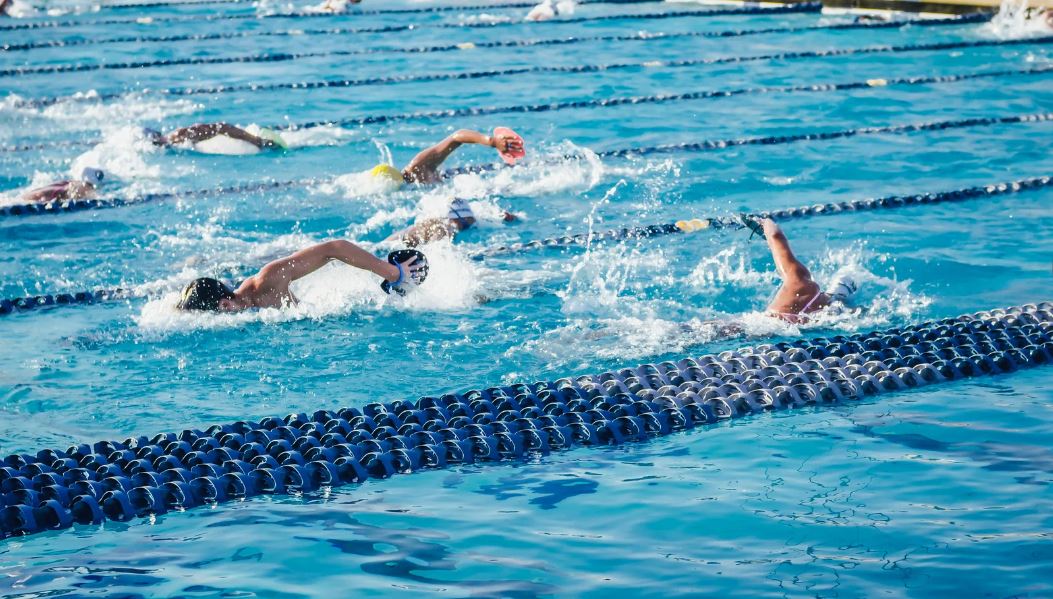
Shoulder pain makes up about 16% of all musculoskeletal injuries, but swimmers? They get hit even harder. The endless overhead motion in swimming puts relentless stress on the shoulder, often leading to chronic problems that can end a career before it really starts.
Thankfully, most of these injuries don’t have to happen. When swimmers actually get what proper stroke mechanics feel like, things change.
If you focus on correct body rotation, keep your core switched on, and nail that high elbow catch, you’ll be way ahead of the pain curve. The shoulder’s a weird joint—ball and socket, held together by all these little muscles, tendons, and ligaments. They’ve got to work together or, well, things fall apart.
Overreaching or forgetting about your core? That’s when those tiny stabilizers get overloaded and start screaming.
The difference between swimming for decades pain-free and being sidelined by chronic injury? It’s usually biomechanics. Tiny tweaks in technique can take a ton of pressure off your shoulders and, honestly, make you faster.
Key Takeaways
- Proper stroke mechanics—especially body rotation and a high elbow catch—keep your rotator cuff safe.
- Using your core spreads out the workload and spares your shoulders.
- Good technique means you can train harder, longer, and stay in the pool for years.
Fundamentals of Shoulder Injury Prevention in Swimming
If you want to dodge shoulder injuries in swimming, you’ve got to get how these injuries happen, work on your biomechanics, keep your rotator cuff strong, and make sure your shoulders stay mobile.
Understanding Swimming-Related Shoulder Injuries
Swimmer’s shoulder is a beast—affecting anywhere from 27% to 87% of competitive swimmers. Usually, it shows up as pain on the front or side of the shoulder.
It creeps up over time, thanks to thousands of overhead strokes—sometimes more than 4,000 per shoulder in just one workout.
Secondary impingement is the big culprit. If your shoulder joint gets too loose in the front, your rotator cuff and biceps tendon have to work overtime to keep things stable.
When the serratus anterior and rotator cuff get tired, they can’t keep the shoulder blade and humeral head where they belong. That’s when the humeral head migrates, squishing the rotator cuff tendon, biceps tendon, or subacromial bursa.
Common pathologies include:
- Subscapularis tendinopathy (73% of elite swimmers)
- Supraspinatus tendinopathy (70% of elite swimmers)
- Bicipital tendonitis
- Subacromial bursitis
Most of the time, it’s not some dramatic injury—it’s overuse, misuse, or just plain old training errors.
Key Biomechanics of Safe Stroke Techniques
Getting your stroke mechanics right is the best way to protect your shoulders. In freestyle, you want your shoulder blades moving back and up as your arm recovers, while your upper arm rotates out and lifts away from your body.
During the pull, your shoulder blades should move forward as your arm comes down and in. Rotating your trunk away from your pulling arm keeps your shoulder out of those risky positions where impingement happens.
When swimmers have shoulder pain, they’ll often change their technique to dodge discomfort. That might mean entering the hand further from the midline, dropping the elbow, or cutting the pull short.
Critical technique elements:
- Hand entry close to midline, elbow above the water
- Reach forward under the water, aiming toward your body’s midline
- Finish the pull-through with your hand near your thigh
- Get a good body roll to avoid too much horizontal adduction
- Keep that elbow high during the catch and mid-pull
Butterfly? That’s even tougher. Both arms move together, and there’s no trunk rotation to help, so the shoulders get put in a pretty awkward spot at hand entry.
Role of Core Engagement and Rotator Cuff Muscles
The rotator cuff and scapular stabilizers have to keep your upper arm bone centered in the socket—while also helping you move forward. That’s a tall order.
The serratus anterior is a multitasker. It keeps your shoulder blade stable and helps drive your body over your arm. When it gets tired, your scapula loses its position, and suddenly the space under your acromion shrinks.
If your core is weak, your shoulders end up doing too much. Strong hips and trunk muscles should be driving your power, especially in butterfly, offloading the shoulders.
| Muscle Group | Primary Function | Injury Risk When Weak |
|---|---|---|
| Serratus anterior | Scapular protraction, upward rotation | Impingement, decreased subacromial space |
| Rotator cuff | Humeral head stabilization | Excessive migration, tendinopathy |
| Core musculature | Trunk rotation, power generation | Compensatory shoulder overload |
| Scapular retractors | Scapular stability during recovery | Poor positioning, fatigue-related dysfunction |
The lats and serratus anterior are your powerhouses. If they tire out early, your form unravels fast.
Maintaining Shoulder Range of Motion and Mobility
Swimmers’ shoulders get weirdly flexible in some ways—tons of external rotation, not much internal. That’s just what happens after all those strokes, but you have to keep an eye on it.
A tight back capsule pushes the humeral head forward, which can cause impingement. Stretching out that posterior capsule helps keep everything moving the way it should.
You’ll want to check both the ball-and-socket joint and how the shoulder blade moves. The shoulder joint is crazy mobile, but it needs the rotator cuff for stability.
Essential ROM assessments:
- External rotation at 90° abduction
- Internal rotation at 90° abduction
- Total arc of rotation (external + internal)
- Posterior capsule flexibility
- Scapular upward rotation during elevation
If your shoulder blade can’t move up and out, you lose space under the acromion. That forces the shoulder joint itself to move more, which isn’t great for impingement risk.
Keeping your range of motion in check helps you avoid frozen shoulder and keeps the balance between stability and mobility. Regular checks can catch problems before they get ugly.
Optimizing Stroke Mechanics for Lifelong Shoulder Health
Swimming well means spreading out the work—don’t let your shoulders do everything. If you get these basics down, you’ll not only save your rotator cuff but also move through the water with less effort.
High Elbow Catch and Proper Hand Entry
The high elbow catch is huge. When your forearm stays vertical during the pull, you’re letting your big back muscles—not your tiny rotator cuff—do the heavy lifting.
Hand should enter at shoulder width, fingertips first, elbow just a bit bent (think 160-170 degrees). Drop your elbow and you’re asking for trouble—internal rotation stress and impingement.
Track your hand along your midline, but don’t cross over. That keeps your upper arm from jamming up against the acromion.
Top swimmers always have their elbow above their hand underwater. That activates the lats and serratus anterior, shifting the load away from the more fragile bits.
Avoiding Overreaching and Shoulder Overload
Overreaching is a sneaky problem. If you reach too far forward at entry, you end up hyperextending the joint and stressing the front capsule and biceps tendon.
Keep your reach where you can still control your scapula. During recovery, don’t swing your arm out wide—let your elbow lead the way, relaxed, to avoid torquing the rotator cuff.
Watch your volume. Piling on more than 40,000 meters a week without enough rest? That’s a recipe for injury. Bumping up yardage by more than 10% at a time overwhelms your shoulder’s ability to adapt.
Engaging Core Muscles for Stability and Power
A strong core is your secret weapon. When you keep your abs and lower back tight, your shoulders don’t have to compensate for a wobbly torso.
Body rotation should start from your hips and core, not your shoulders. That takes the pressure off your smaller shoulder muscles.
The torso’s your engine; the shoulders are more like the transmission. If your core is weak, your shoulders get overworked, which leads to sloppy form and fatigue.
Add some targeted core work to your swim routine. It’ll help you hold good posture and swim longer without things falling apart.
Techniques to Protect the Rotator Cuff
The rotator cuff muscles—supraspinatus, infraspinatus, teres minor, and subscapularis—are the main stabilizers for the humeral head inside the glenoid socket. They’re working quietly in the background every time you move your arm.
Swimmers can help protect these muscles by steering clear of those extreme end-range positions. It’s tempting to push for extra reach, but that’s where trouble often starts.
Keeping a healthy balance between internal and external rotators is key. If the external rotators get too weak, those powerful internal rotators will start to dominate and pull the humerus forward, which can lead to impingement.
Aiming for a 3:4 ratio of internal to external rotation strength is a solid guideline. Most swimmers don’t realize how quickly that ratio can slip out of balance.
Manual therapy can really help with soft tissue restrictions that mess with shoulder mechanics. A good practitioner knows how to release tight pecs that yank the shoulder into too much internal rotation.
Scapular mobilization is also worth mentioning—it helps the shoulder blade and arm move together more smoothly. Honestly, it’s often overlooked.
If you notice clicking, pain at night, or your range of motion shrinking, don’t brush it off. Getting your technique checked early can save you a lot of headaches down the road.