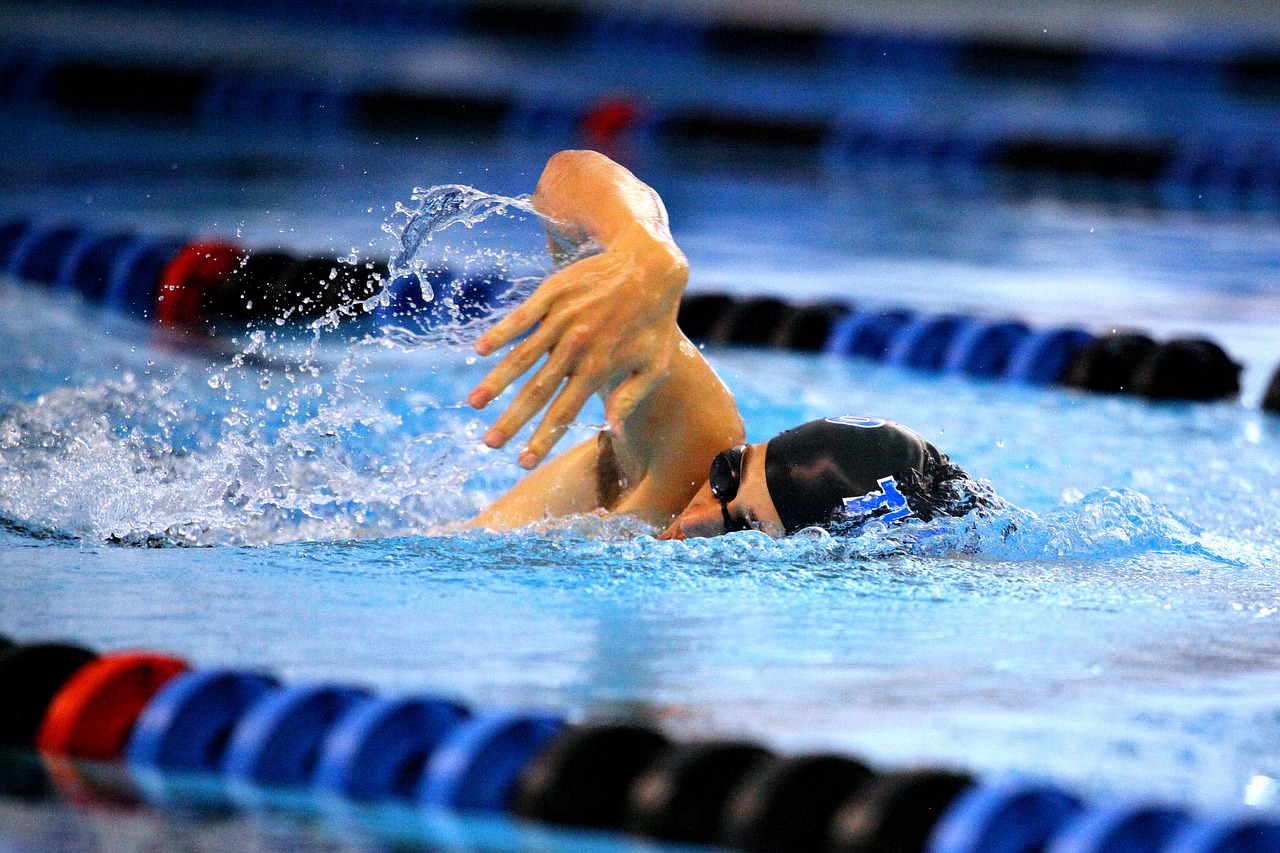
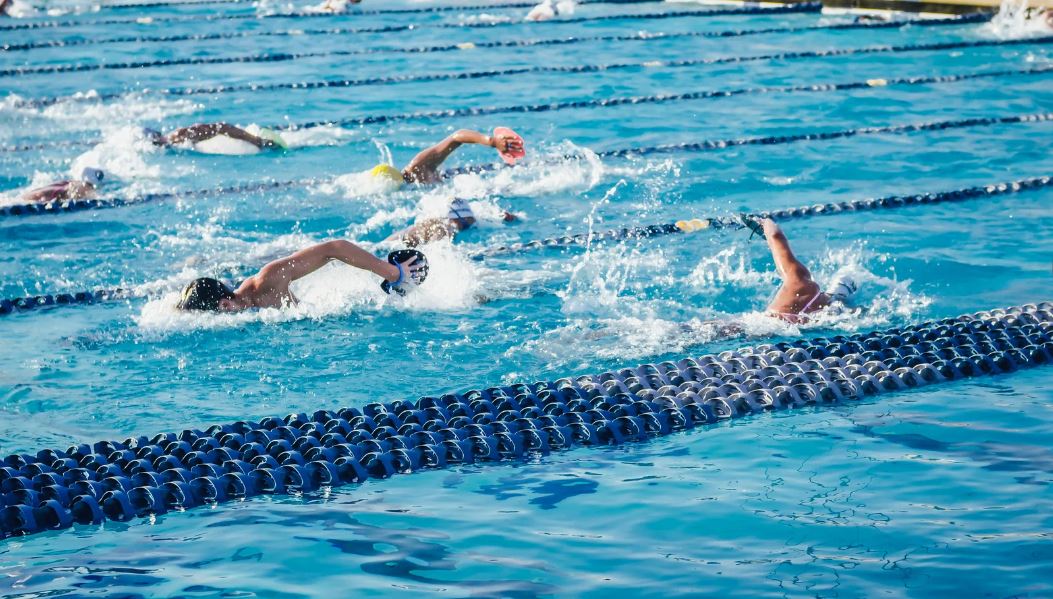
Freestyle breathing technique separates struggling swimmers from efficient ones. The key to proper freestyle breathing is rotating your head to the side while keeping it low in the water, rather than lifting it up, which maintains body alignment and prevents your hips from sinking.
This fundamental skill lets swimmers take quick breaths without disrupting their stroke rhythm or creating unnecessary drag. Many swimmers make the mistake of lifting their heads to breathe, which causes their hips to drop and forces their arms to compensate with inefficient pulling patterns.
When swimmers rotate their heads correctly and stay streamlined, they can swim longer distances with less fatigue. The difference can show up within just a few pool sessions.
Mastering breathing technique means understanding how air affects buoyancy, timing your exhalations underwater, and developing consistent breathing patterns. Swimmers who practice bilateral breathing and focus on minimizing head movement during breaths build better cardiovascular endurance and create more symmetrical strokes.
Key Takeaways
- Rotate your head to the side rather than lifting it to maintain proper body alignment and prevent drag
- Exhale underwater and time your quick inhalation when your head rotates, keeping the breath as fast and low as possible
- Practice bilateral breathing patterns to develop stroke symmetry and build cardiovascular endurance for longer swimming sessions
Fundamentals of Proper Freestyle Breathing
Effective freestyle breathing relies on head rotation rather than lifting. It’s all about synchronized body movement and controlled exhalation patterns that keep you streamlined throughout the stroke cycle.
Why Side Breathing Beats Lifting Your Head
Rotating the head to the side keeps your body aligned in freestyle, while lifting it creates instant drag and throws off your balance. When you lift your head to breathe, your hips sink as a natural counterbalance.
This creates an inclined position that increases water resistance and makes your legs work overtime. Side breathing keeps your head lined up with your spine.
You just rotate enough to clear one side of your mouth from the water, making a small air pocket in the bow wave you generate. The key is minimal head movement—your body stays horizontal.
Lifting disrupts your streamlined position and makes your arms push down instead of pulling efficiently. Side breathing preserves the stroke mechanics that actually move you forward.
Head Position and Body Rotation Essentials
Your head should stay neutral, with the waterline around mid-forehead when not breathing. One goggle lens stays in the water during the breath, the other clears the surface.
This prevents over-rotation and keeps you lined up. Body rotation drives effective breathing in freestyle.
Your torso rotates as one unit, usually about 30-45 degrees from horizontal. The head rotates with your body roll, not separately.
When your body rotates to the breathing side, your head turns naturally within that movement. Timing is huge here.
The breath starts as your recovering arm swings forward and the other arm finishes its pull. Rotation peaks as the recovering arm extends, creating the best window to inhale.
| Element | Proper Position |
|---|---|
| Waterline | Mid-forehead when face down |
| Head rotation | Synchronized with body roll |
| Body angle | 30-45 degrees during breath |
| Goggle position | One lens in water, one out |
Building Effective Breathing Patterns
A breathing pattern determines how often you inhale during front crawl. It needs to supply enough oxygen while keeping your stroke rhythm and symmetry.
Common patterns include breathing every two, three, four, or five strokes. Bilateral breathing alternates sides with each breath, usually in a three-stroke or five-stroke pattern.
This helps you develop balanced technique and keeps you from over-rotating to one side. It also comes in handy in open water, letting you check both sides for other swimmers or landmarks.
Unilateral breathing (always to one side) works for swimmers who need more frequent air or just prefer the consistency. Some swimmers go every two strokes in practice but switch it up in races.
The best breathing pattern depends on your stroke rate, aerobic capacity, and race distance. Short bursts under 30 seconds need almost no breathing for max speed.
Distances of 30-75 seconds benefit from breathing every two to four strokes. Longer swims call for steady oxygen with breaths every two or three strokes to keep your energy up.
Continuous Exhalation Underwater
Exhaling while your face is in the water stops carbon dioxide from building up and means you don’t have to waste time exhaling when your mouth clears the surface. This shortens breath duration and keeps your stroke smooth.
Start a slow, controlled exhale right after inhaling and putting your face back in. Just before you turn to breathe, finish with a forceful exhalation.
That last push clears out any leftover air and creates a vacuum effect—fresh air rushes in faster, and you barely have to think about it. Many swimmers hold their breath between breaths, but that just builds tension and disrupts your rhythm.
The gradual underwater exhale keeps you relaxed and your breathing sustainable. You want a steady stream of bubbles, not a rushed release.
If you blow out too fast, you’ll run out of air too soon. Too slow, and you won’t get enough gas exchange before the next breath.
Advanced Techniques and Training for Efficient Freestyle Breathing
Mastering advanced freestyle breathing means developing bilateral breathing patterns, using targeted drills for breath control, and keeping proper body position throughout your stroke. These techniques all work together to optimize oxygen exchange and keep your stroke efficient.
Bilateral Breathing for Symmetry and Endurance
Bilateral breathing means you alternate breath sides, usually every third or fifth stroke. This builds muscular balance and helps you swim straighter.
Research shows bilateral breathing cuts down on stroke asymmetries that come from always breathing to one side. Swimmers who stick to their dominant side often end up with uneven pulls and lopsided body rotation.
Key bilateral breathing benefits:
- Promotes balanced muscle development in shoulders and core
- Improves spatial awareness in open water
- Enhances tactical flexibility during races
- Reduces neck strain from repetitive one-sided rotation
Try starting bilateral breathing during warm-up sets before adding it to faster swimming. For races over 75 seconds, bilateral breathing gives you enough air while keeping your stroke symmetrical.
If you have a high stroke rate, try every fifth stroke; slower tempos work better with every third stroke. It’s all about finding what keeps you comfortable and efficient.
Freestyle Breathing Drills to Enhance Breath Control
Targeted breathing drills help you nail the timing and mechanics for efficient air exchange. The catch-up drill is great for head rotation—it makes you wait with one arm extended while the other finishes its pull.
Essential breathing drills:
| Drill Name | Primary Focus | Duration |
|---|---|---|
| Catch-up drill | Head rotation timing | 4 x 50m |
| Side-kicking drill | Body position during breath | 6 x 25m |
| 3-5-7 breathing | Breath control progression | 200m continuous |
The side-kicking drill puts you on your side with one arm out front, letting you work on head rotation for breathing while staying aligned. It’s a good way to isolate the breathing motion without all the chaos of a full stroke.
Breathing every stroke during slow swimming builds comfort with head rotation mechanics. Practice forceful exhalation underwater, then a quick inhale when your mouth clears the surface.
That vacuum effect makes air intake almost automatic and way less stressful.
Streamlined Body Position and Efficient Stroke Integration
Getting the body position right while breathing is crucial for efficient freestyle. You want to stay streamlined—don’t let your form fall apart just because you need air.
The head should rotate gently along your central axis. Try not to lift; keep one goggle in the water as you breathe.
If you lift your head, your hips tend to drop, which drags you down and wastes energy. It helps to press your chest slightly downward as you breathe, engaging your core to stay horizontal.
Body position checkpoints during breathing:
- Head rotation: Turn your head instead of lifting; keep one goggle underwater.
- Hip stability: Use your core to keep hips level.
- Shoulder roll: Let your shoulders rotate naturally—don’t force it.
- Arm timing: Keep your pull smooth, no pausing or weird compensations.
The breath should come during the recovery phase, when your breathing-side arm is coming out of the water. This way, the body’s rotation helps your head move without extra effort.
Breathing too early or too late can throw off your rhythm and make things harder than they need to be. Getting all these details to click with your swim form takes a lot of practice, honestly.
No matter how fast or slow you’re going, try to keep your breaths low, quick, and streamlined. Ideally, your breathing stroke shouldn’t look much different from your regular stroke.